When you hear the word habit, do you associate it with good habits or bad habits? Obviously, it can be either. And humans aren’t the only ones with habits. If you own a pet, I’m sure you realize their entire daily routine is ruled by habit, from the time they wake you up in the morning to when they hint it’s time for bed in the evening.
Whether a habit is deemed good or bad, it is generated and perpetuated because it creates a familiarity often associated with stability and security. A habit generates an expected end and normally doesn’t lead to a surprising conclusion. Even if the habit is a bad habit, the act of the habit or being in the midst of the habit feels familiar, and for some reason, can be comforting. As a simple example, nail-biters usually don’t like what is happening to their nails and the tips of their fingers, but the action can ease tension.

The consequences of a habit may not be beneficial, but coursing down a known pathway – even one that isn’t pleasant – is sometimes comforting.
Sure, we have several good habits we perform on a normal basis – prepping clothes, brushing and flossing, annual well checks, checking in on friends and relatives, making sure your car’s gas tank has adequate fuel. The list goes on and on. However, we’ve battled bad habits since the beginning of mankind. There are even well-known sayings to describe habits. I’m sure you’ve heard most, if not all, of them. Sayings like, “Old habits die hard”. “You can’t teach an old dog new tricks”. “A leopard can’t change his spots”.
Take the saying “Old habits die hard” for example. People are often reluctant to change their way of doing something, especially something they’ve been doing for a long time. The longer we do it, the harder it is to leave it behind. And like I said before, the habit involves the comfort of the known versus the unknown, even though the outcome may not be beneficial.
Can we get real for a minute and talk about genuinely destructive, habitual actions? Something that controls a person? Limits their freedom? Sets a person in bondage?

Maybe it’s you who’s in bondage to a behavior. Or maybe it is someone you care deeply about, and you are now entangled in the situation. The scenarios are endless. Usually more well-known addictions, such as substance abuse, pornography, and gambling come immediately to mind. But I’m also talking about other destructive habitual actions like constant lying and slander, overspending and overconsumption of all sorts, self-harm, failure to show up for work, unhealthy amounts of screen time, manipulation of others, perfectionism and need for control, returning to a domestic abuse situation, or refusing to give forgiveness. The list could go on and on. Perhaps one of these examples made you a little uncomfortable because it hit a little too close to home.
Many people are stuck in bondage. Bound by addiction and fear. Returning over and over again to something that isn’t good for them.
Addicts of any sort know that their bad habit does not benefit them, but gives a strange sort of comfort and familiarity in the moment. Usually, it provides a brief reprieve of the current discomfort they are experiencing, or it gives a short-lived high. As another saying goes, “Better the devil you know, than the devil you don’t.” In other words, something bad and familiar is better than bad and unknown. Fear is arguably the biggest driver of habits, good and bad.
Again, habitual actions are nothing new to the human population. The desire to return to a familiar and oddly comforting situation is ingrained in our nature. Well over 3,000 years ago, the Israelites lived as slaves in Egypt for 400 years prior to entering the Promised Land. Four hundred years of grueling labor, harsh taskmasters, and lives full of bitter bondage. And then the Lord offered them a way out. He sent Moses to them as their deliverer. You probably know the story. They left Egypt, crossed the Red Sea on dry land, and entered the wilderness on the way to the Promised Land. However, the way wasn’t easy.
As the Egyptians marched after the children of Israel following their exodus from Egypt, the Israelites became very afraid and cried out to the Lord. They accused Moses of taking them away to die in the wilderness.
Exodus 14:12
Is not this the word that we did tell thee in Egypt, saying, Let us alone, that we may serve the Egyptians? For it had been better for us to serve the Egyptians, than that we should die in the wilderness.
Moses replied, “The Lord shall fight for you, and ye shall hold your peace.” (Exodus 14:14).
Once God closed the Red Sea on the Egyptian onslaught, He led the Israelites through the wilderness, so they wouldn’t travel through the land of the Philistines and see war, change their minds, and return to Egypt. (Exodus 13:17).
Not long into the 40-year detour in the wilderness, they began to murmur and complain when water and food became scarce. They cried to Moses and Aaron.
Exodus 16:3
And the children of Israel said unto them, Would to God we had died by the hand of the Lord in the land of Egypt, when we sat by the flesh pots, and when we did eat bread to the full; for ye have brought us forth into this wilderness, to kill this whole assembly with hunger.
So the Lord provided them with manna to eat, but they still complained.
Numbers 11:4-6
4 And the mixt multitude that was among them fell a lusting: and the children of Israel also wept again, and said, Who shall give us flesh to eat?
5 We remember the fish, which we did eat in Egypt freely; the cucumbers, and the melons, and the leeks, and the onions, and the garlick:
6 But now our soul is dried away: there is nothing at all, beside this manna, before our eyes.
Numbers 20:5
And wherefore have ye made us to come up out of Egypt, to bring us in unto this evil place? it is no place of seed, or of figs, or of vines, or of pomegranates; neither is there any water to drink.
Numbers 21:5
And the people spake against God, and against Moses, Wherefore have ye brought us up out of Egypt to die in the wilderness? For there is no bread, neither is there any water; and our soul loatheth this light bread.
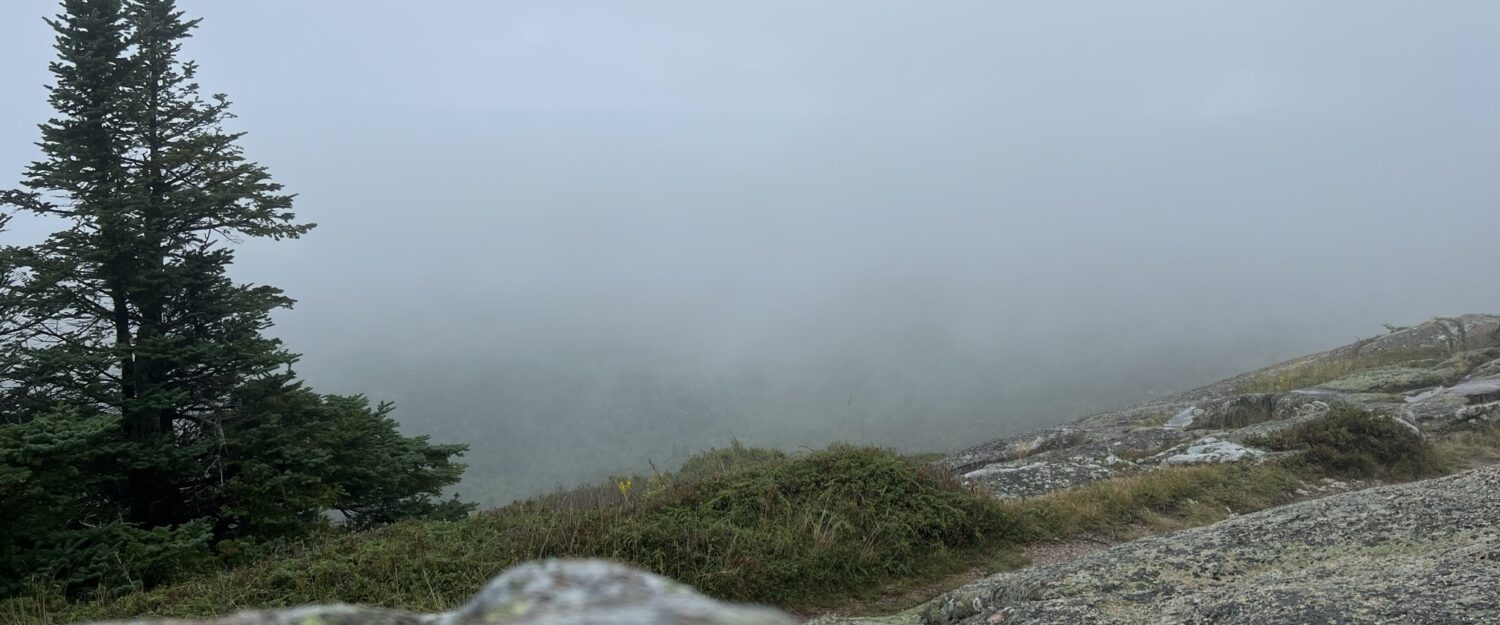
Their memories of slave hood became foggy, causing them to forget how bad their previous situation was. They wanted to return to Egypt.
During their wilderness journey, the Lord told Moses to send spies into the promised land of Canaan to scout out the land and report back. Following their report that the land flowing with milk and honey was also full of giants and adversaries, the children of Israel cried out again to Moses and Aaron.
Numbers 14:2-4
2 And all the children of Israel murmured against Moses and against Aaron: and the whole congregation said unto them, Would God that we had died in the land of Egypt! Or would God we had died in this wilderness!
3 And wherefore hath the Lord brought us unto this land, to fall by the sword, that our wives and our children should be a prey? were it not better for us to return into Egypt?
4 And they said one to another, Let us make a captain, and let us return into Egypt.
Here they were again, wanting to return to something they knew in their hearts was not good for them. But it was an oddly comforting alternative because it was something they were familiar with. Just like a bad habit. You could imagine how frustrated Moses must have been as a caregiver knowing there was a better way for them if they continued moving forward and follow God.
This scenario also reminds me of Lot’s wife when she looked back at Sodom and Gomorrah during their escape and became a pillar of salt. Are you trying to walk forward to a place of prosperity and promise with your head turned halfway around looking over your shoulder? The view behind you may be blurry because it’s becoming a little distant and time has made it less clear. But don’t be fooled. If you turn around and return, it will come into focus and it will still be the same unhealthy place, the same harsh situation. So what does this story about the Israelites in the wilderness and Lot’s wife have to do with us?
Harmful habits have a way of turning into a vicious cycle. A perpetual circle of short-lived highs and long spans of defeat and returning to what is bad for us. Whether it’s returning to drugs and alcohol for a temporary escape or judging others’ social media accounts to bring self-validation, we blind ourselves with fleeting gratification when in reality we create a long-lasting scar. But I don’t want to leave you on a negative note. There is a way forward. The Lord can release us from the bondage of our sins and mistakes. We can trade the fear that keeps us in bondage for the trust in Him that offers us new life. The Lord has more for us if we keep moving forward and keep our eyes upon Him. When fear wells up in us, peace comes by keeping our eyes on Him.
Ponder this.
I hope this post helps someone today. This topic has been on my heart for a long time. We don’t have to continue the vicious cycle we create through bad habits. There is a way forward. Give it to God and let Him take the lead. Moses told the Israelites the same thing.
Exodus 14:14-15
14 The Lord shall fight for you, and ye shall hold your peace.
Then the Lord said to Moses,
15 Wherefore criest thou unto me? Speak unto the children of Israel, that they go forward:
Go forward. Never back.
The Lord is our Saviour now just as He was a Saviour to the Israelites when He brought them across the Red Sea and out of Egypt.
Exodus 13:3
And Moses said unto the people, Remember this day, in which ye came out from Egypt, out of the house of bondage; for by strength of hand the Lord brought you out from this place:
He is our strength in a time of weakness. He provides what we need along the way, when we need it. For the children of Israel, He separated the Red Sea, flowed water from rock, dropped manna from the sky, and blew quail in on the wind. However, sometimes we still take our eyes off Him, forget the trials of our past, and for some strange, illogical reason, want to return to Egypt.
So what can we do about it? There is hope. Hope in the Lord who is greater than the bondage of any harmful habit. I know I’ve given you a lot of Scripture today. But repeating Scripture to ourselves is one of the best strategies we have to combat our fear and weaknesses and strengthen our armour of God. Here’s just a few more verses to sharpen our sword of the Spirit.
1 Peter 5:7
Casting all your care upon him; for he careth for you.
Isaiah 26:3
Thou wilt keep him in perfect peace, whose mind is stayed on thee: because he trusteth in thee.
2 Timothy 1:7
For God hath not given us the spirit of fear; but of power, and of love, and of a sound mind.

Let’s resolve to break free from old harmful habits. From things that steal our freedom. We don’t have to be alone in seeking freedom when the Lord is our strength. So break free from Egypt, don’t look back, and keep your eyes on the Promised Land. This is when a one-way ticket is the best choice.
What will you do with this day you’ve been given? How will you make it matter for His Kingdom?
Discover more from Life is a Vapour
Subscribe to get the latest posts sent to your email.
Wonderful devotion!
Thank you, Doris! I’m so glad the Lord used these words to speak to you.
Another great devotion Beth. Of course I’ve had different habits throughout my life but nothing that was truly harmful to me or anyone else or something that I couldn’t overcome. What hurts me the most and weighs on my heart are those that suffer from addictions such as alcohol, drugs, smoking, just to name a few. When you watch family and friends go through these things and see how it controls their lives and at times it takes their life it hurts so much. If only they would turn to God instead of the addiction, that’s my prayer for them. Not everyone is strong enough to overcome the habit or addiction on their own but with God, all things are possible. ❤️🙏
Well said, Dottin! It is very painful to see others go through these battles. Even though we may not be able to help in a tangible way, we can always pray for God’s strength and direction in their life!